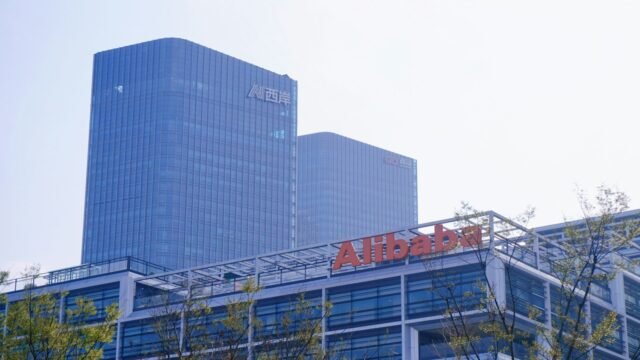
China’s largest AI developers moved on two fronts in the days leading up to July 20. Alibaba previewed Qwen 3.8 Max, a model reported to hold about 2.4 trillion parameters, and signaled that open weights will follow. DeepSeek, meanwhile, continued to position its V4 model family as a low cost, long context option for developers, with a change to its API lineup due on July 24.
Together the moves show that competition in frontier AI is no longer only about raw capability. Price, accessibility and the availability of open weight models have become central to how developers choose.
DeepSeek V4: long context at low prices
DeepSeek introduced V4-Pro and V4-Flash through its API in April 2026. According to the company’s documentation, both models support a one million token context window and can run in thinking and non thinking modes. They are accessible through OpenAI style chat completion interfaces and Anthropic style endpoints, which eases integration with existing tools.
Pricing is the core of DeepSeek’s strategy. The company’s published rates list V4-Flash at $0.0028 per million input tokens on a cache hit, $0.14 on a cache miss and $0.28 per million output tokens. V4-Pro is listed at $0.003625, $0.435 and $0.87 respectively. Press reports have described DeepSeek’s V4 API as roughly 12 times cheaper than OpenAI’s GPT-5.5, though direct comparisons depend on the mix of input and output tokens, caching and usage patterns.
DeepSeek is also retiring its legacy model identifiers. According to its change log, the deepseek-chat and deepseek-reasoner names will be discontinued on July 24, 2026. During the transition they route to V4-Flash in non thinking and thinking mode respectively. After that date developers must call the new names, such as deepseek-v4-flash or deepseek-v4-pro, directly.
Alibaba’s largest model to date
Alibaba’s preview of Qwen 3.8 Max places it among the largest AI models announced by any company. Reports put its size at about 2.4 trillion total parameters. Alibaba says the model is designed to deliver frontier level performance across major AI tasks and has presented it as competitive with leading closed models from US developers.
The Qwen family already holds a prominent place in the global open model community, with versions widely adopted by developers, researchers and companies. Alibaba has indicated it will release open weights for Qwen 3.8, which would be the first time it has done so for a Max tier model, although no date has been given. Open weights let organizations run a model on their own infrastructure, subject to the license and any commercial terms attached.
Total parameter count is only part of the picture. Modern mixture of experts architectures activate only a fraction of their parameters for each token, so a 2.4 trillion parameter model may use far less compute per request than the headline figure suggests. What matters in practice is how many parameters are active and how efficiently the system runs.
What it means for developers
The capital required to train and serve frontier models has made the field extremely expensive. If Chinese companies can offer low cost APIs and strong open weight models to developers worldwide, competition extends beyond model intelligence to economics and deployment flexibility.
Choosing a model now involves more variables than benchmark scores: API price, latency, coding and reasoning ability, context length, tool use, service reliability and the option to run on private infrastructure. DeepSeek is competing on price and context, while Alibaba is expanding its ecosystem with very large models and a promise of open weights. The real test for both will be how widely developers and businesses adopt them and how well they balance cost, speed and quality in production.