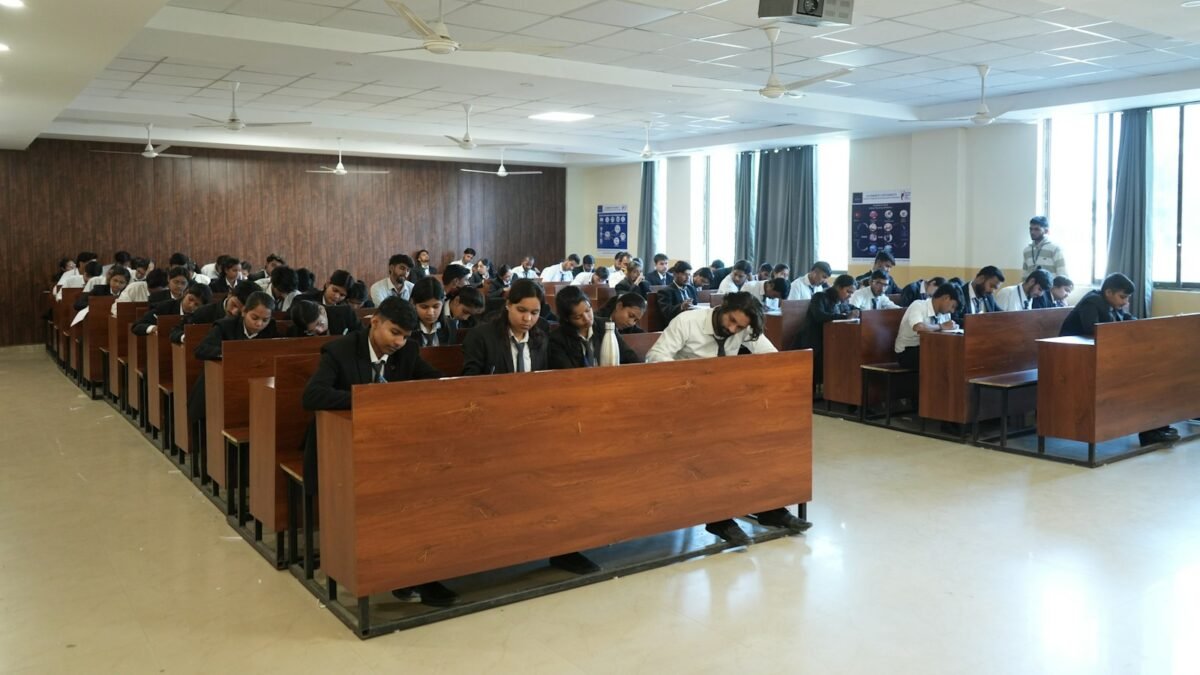
Students who use generative AI for homework get better homework grades and finish faster, but their performance on exams they must sit without assistance declines significantly over time, according to a large study of secondary school students in China.
The paper, “The Generative AI Learning Penalty: Evidence from Chinese Secondary Education,” by David Strömberg, Victor Lei and Yanhui Wu, was released as a discussion paper by the Centre for Economic Policy Research (CEPR). It is one of the largest longitudinal studies to date on how AI tools affect actual learning rather than task completion.
What the researchers measured
The authors followed roughly 26,800 students for about two and a half years. They collected detailed records of homework submissions and grades, the time students spent completing assignments, monthly closed-book examinations, and results on high school and college entrance exams.
That combination allowed them to separate two things that are often conflated: how well students perform on work where AI is available, and how much they have learned, as measured when it is not.
Better homework, worse exams
According to the paper, students who began using generative AI saw their homework scores rise by an average of 18 percent, while the time spent on homework fell by about 30 percent.
The exam results moved the other way. Within six months, the monthly closed-book test scores of AI users had fallen by an average of about 20 percent relative to comparable students. Scores on high school and college entrance examinations also declined, by roughly 18 percent and 24 percent respectively. The researchers report that the full negative effect took about two years to emerge.
The damage was largest in social science subjects, with STEM and language subjects also affected. The effects were more pronounced among younger students, high-achieving students and boys.
How students used AI mattered most
The study’s central finding concerns behavior rather than the technology itself. About 80 percent of the learning loss was concentrated among students whose patterns suggested they were handing homework to the AI outright: very high homework scores combined with unusually short completion times.
By contrast, students who used AI as a support tool while spending roughly as much time on homework as their peers showed only a small decline in learning outcomes.
Implications
The authors’ interpretation is that the problem is not AI access but outsourcing. Used for explanation, guidance and checking one’s own reasoning, the tools appear to do limited harm. Used to produce finished answers, they inflate short-term grades while undermining the knowledge that exams, and later life, depend on.
The findings arrive as education systems around the world, including China’s, are expanding AI instruction and access in schools. They suggest that policies focused on how students use AI, and on assessment designs that can distinguish learning from delegation, may matter more than decisions about whether to allow the tools at all.
As a discussion paper, the study has not yet completed formal peer review, and its results come from one country’s education system. The authors present it as evidence to inform policy rather than a final verdict.