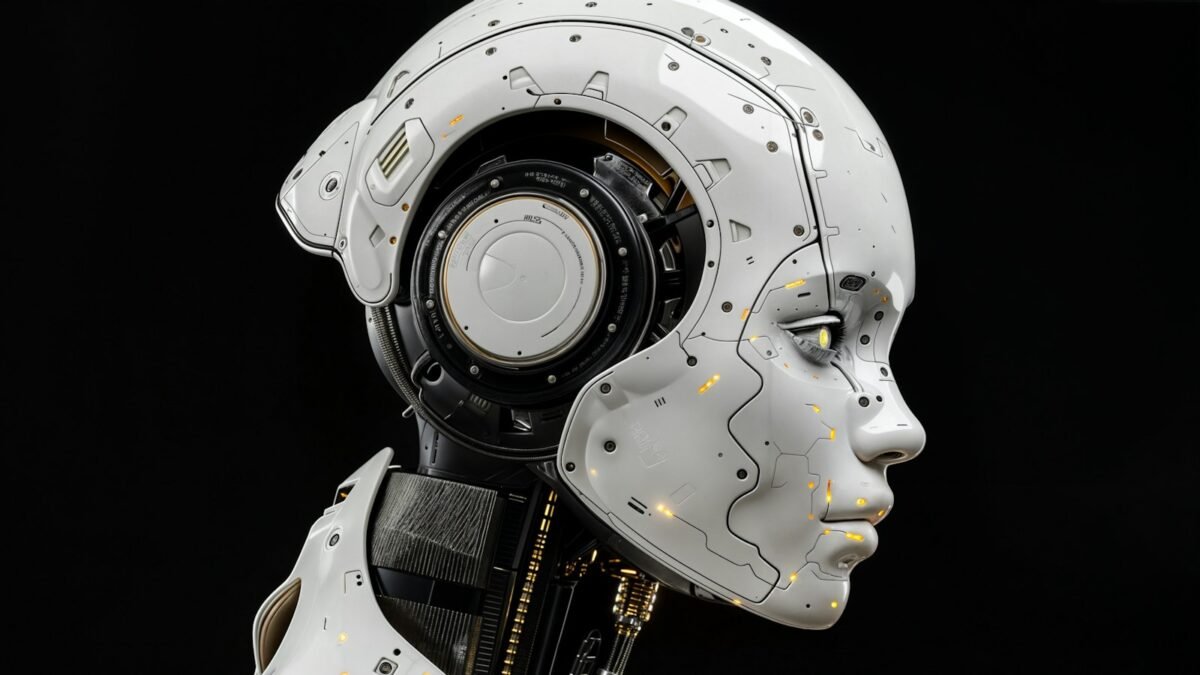
Nvidia chief executive Jensen Huang told an audience at CES 2026 in Las Vegas that humanoid robots could reach human-level capabilities this year, one of the boldest predictions yet from an industry that is racing to build machines that move, balance and make decisions like people.
Speaking during the show in early January, Huang said the pace of progress means the results will be visible soon. Robots, he argued, are no longer simply programmed; they are trained in simulated environments where they learn from millions of trials before operating in the physical world. That approach, which Nvidia calls physical AI, relies on the company’s simulation and robotics platforms, and it is central to Nvidia’s pitch that it will supply the computing layer for the coming robotics industry.
Robots everywhere on the show floor
Humanoid robots were a dominant presence at CES 2026. Demonstrations showed machines walking naturally, perceiving their surroundings and carrying out basic tasks, and Boston Dynamics presented a production version of its Atlas humanoid intended for factory deployment. The displays suggested that in terms of perception and planning, machines are closing in on human performance. The picture is more complicated on the hardware side.
The dexterity problem
Robotics researchers say the central obstacle is no longer thinking or decision making but physical skill. The human hand contains thousands of sensors that control pressure, angle and grip with great precision. Current robotic hands grasp simple objects with near-total reliability, but success rates fall sharply with awkward or delicate items such as a spoon, a screwdriver or small components.
Several experts have pointed to the lack of small, powerful and highly precise actuators and motors as the biggest bottleneck. Some believe that human-level dexterity remains a decade or more away, regardless of how quickly the AI software improves. That view sits uneasily with Huang’s timeline, and the gap between the two is likely to define the humanoid debate in 2026.
The jobs question
Alongside the capability claims, the argument over employment is intensifying. Huang’s position is that robots will create jobs rather than eliminate them. He has pointed to shrinking working-age populations and millions of unfilled positions in many countries, arguing that economies need what he has described as AI immigrants to fill those gaps.
The data offer a more mixed picture. Reports compiled in 2025 attributed tens of thousands of announced layoffs to AI, and a number of economists warn that while productivity will rise, the gains may accrue to a small number of companies and individuals while much of the workforce faces uncertainty. Several large robotics companies have also said their humanoids will begin working in factories in 2026, with broader deployment to follow, which moves the discussion from theory to practice.
Whether or not humanoid robots match human ability this year, robots and AI are no longer a story about the future. They are becoming part of the economy, industry and daily life, and the open question is how prepared societies are for that shift.