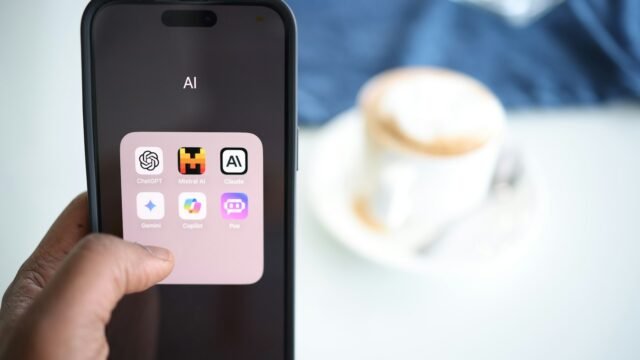
Two and a half years after ChatGPT’s public launch, conversational AI has become a crowded field. A dozen assistants now compete for users, each built by a different company and each with a distinct emphasis: some are embedded in apps people already use, some focus on research with citations, and some are designed for emotional support rather than productivity. Here is a guide to the main players as of April 2025, roughly ordered by reach.
The assistants with the largest audiences
Meta AI. Meta’s assistant is built into Facebook, Instagram, WhatsApp and Messenger, which is the main reason it has the largest audience of any AI assistant. On the company’s first-quarter earnings call on April 30, 2025, chief executive Mark Zuckerberg said almost a billion people a month were using Meta AI across Meta’s apps, up from 700 million in January. It answers questions, generates images and summarizes content, and its main advantage is that users do not need to open a separate app to reach it.
ChatGPT. OpenAI’s chatbot remains the product most people associate with generative AI. It is used for writing, coding, research, tutoring and business analysis, and OpenAI has said it serves hundreds of millions of people each week. Its default model in early 2025 is GPT-4o, which handles text, images and voice, and the service is also available to companies through OpenAI’s enterprise and API products.
Google Gemini. Google’s assistant, formerly Bard, is integrated into Google Workspace apps such as Gmail and Docs and into Android. Court filings in Google’s antitrust case disclosed in April 2025 that the Gemini app had about 350 million monthly users. Its strengths are document summarization, analysis of long files and video, and access to Google’s search and productivity tools.
Microsoft Copilot. Microsoft’s assistant is woven into Windows, Edge and Microsoft 365, where it drafts documents, summarizes meetings and generates images. For office workers who already live in Word, Excel and Teams, it is often the AI tool closest at hand.
Assistants with a distinct focus
Claude. Anthropic’s assistant has built a following among researchers, writers and software developers for careful analysis, long-document handling and a measured tone. Anthropic positions it around safety and reliability rather than consumer reach.
Perplexity. Perplexity AI is an answer engine rather than a general chatbot: it searches the web, writes a concise response and attaches citations to its sources. That makes it popular for research and fact-checking, though users still need to check the cited pages.
Pi. Built by Inflection AI, Pi was designed as a conversational companion with a warm, supportive style that emphasizes emotional intelligence over task completion. Inflection shifted its focus to enterprise software in 2024 after most of its founding team moved to Microsoft, but the Pi app remains available.
Poe. Quora’s Poe is an aggregator: it lets users chat with many models, including those from OpenAI, Anthropic, Google and Meta, in one interface, and build simple custom bots on top of them.
Companionship and mental health
Replika and Wysa. These two apps use conversational AI for emotional support rather than productivity. Replika is a companion chatbot that holds ongoing personal conversations with its users. Wysa is a mental health app that uses structured, cognitive behavioral therapy-based conversations and offers access to human coaches. Both illustrate the growing use of chatbots for loneliness, stress and anxiety, an area that clinicians and regulators continue to watch closely.
China’s contenders
Ernie Bot and DeepSeek. Baidu’s Ernie Bot was one of the first Chinese consumer chatbots and is widely used domestically, with strong Chinese-language capabilities. DeepSeek, a Hangzhou-based lab, drew worldwide attention in January 2025 when its R1 reasoning model matched leading Western models on several benchmarks at a far lower reported training cost. Its chatbot briefly topped app store download charts in the United States and prompted a sharp selloff in AI-related stocks.
What the lineup shows
The assistants with the most users are the ones bundled into platforms people already open every day, which favors Meta, Google and Microsoft. Standalone products such as ChatGPT, Claude and Perplexity compete instead on capability, specialization and trust. The emerging category of companion and wellness bots points to a third direction: AI that is valued less for what it knows than for how it responds. For most users, the practical choice comes down to which ecosystem they already work in and whether they need a general assistant, a research tool or something more personal.