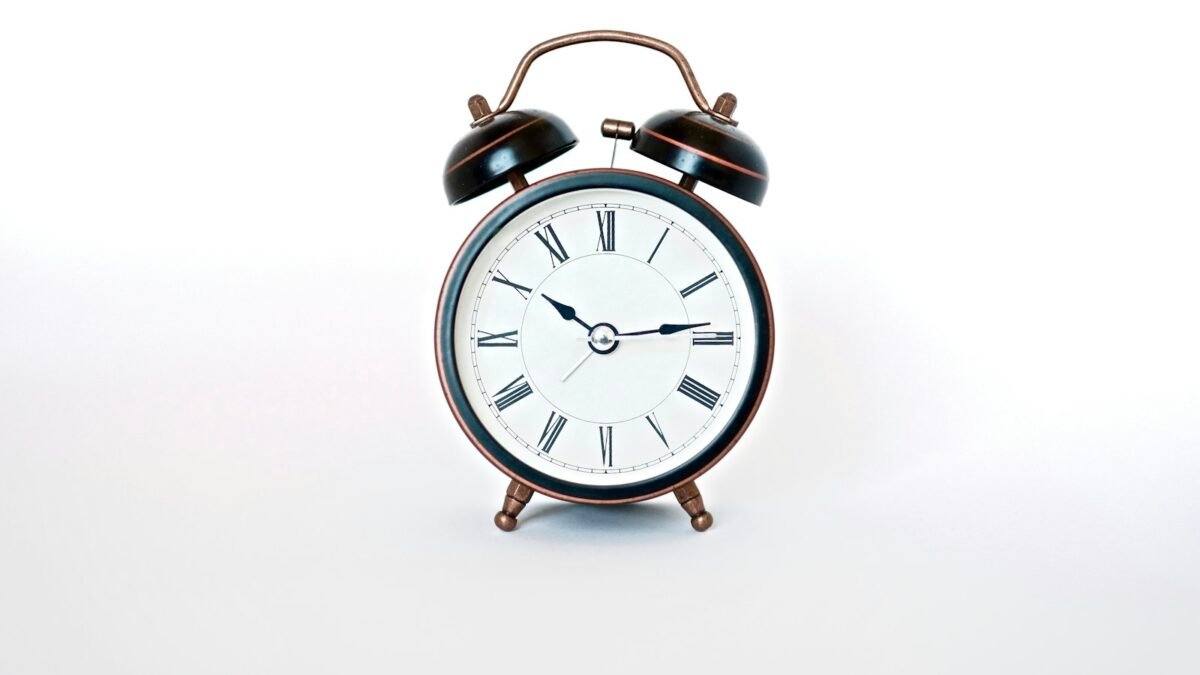
Artificial intelligence systems are treated as exceptionally capable across many fields, yet some basic human skills still defeat even the latest models. Reading and drawing an analog clock, something most people learn in childhood, is one of them.
The weakness was put on public display by AI World Clocks, a website by artist Brian Moore that asks nine different AI models to render the current time as an analog clock every minute. The results often look attractive at a glance, but close inspection reveals confusion: numerals in the wrong positions, hands floating free of the center, and times that bear no logical relationship to the hour being requested.
What the research shows
Formal testing supports the observation. A study published in 2025 that compared leading AI models with people on analog clock reading found that humans read the time correctly about 89 percent of the time, while even the best-performing models scored far lower, well under half of the human rate. The authors attribute the gap to how large language and vision models work: they rely heavily on pattern recognition learned from training data rather than on geometric calculation or genuine spatial understanding. Reading a clock requires interpreting angles, the relative lengths of hands and the mapping between position and time all at once, which remains difficult for current systems.
The 10:10 problem
A bias in internet imagery makes the task harder. Watch and clock advertising has long favored showing the time as 10:10, because the hands form a symmetrical, smile-like shape that frames the brand name, and marketing research has found that this arrangement is viewed more favorably by consumers. Because so many of the clock images available online show 10:10, that time is heavily over-represented in the data used to train image and multimodal models. When a model is asked to draw a clock showing a different time, it often drifts back toward 10:10, reproducing the pattern it has seen most often.
What it tells us about AI
The example illustrates an important point: AI capability is uneven. Systems that perform impressively on language, writing and image generation can still fail at simple concepts that humans master early, because those concepts depend on structured reasoning rather than on statistical regularities in data. The analog clock is a reminder that current AI is not a general replica of human intelligence but a system that performs best within the limits of its data and the patterns it has learned.
As developers improve visual reasoning and spatial understanding in future models, the gap may narrow. For now, telling the time from a clock face remains a modest but telling case in which a childhood skill still beats the most advanced AI.