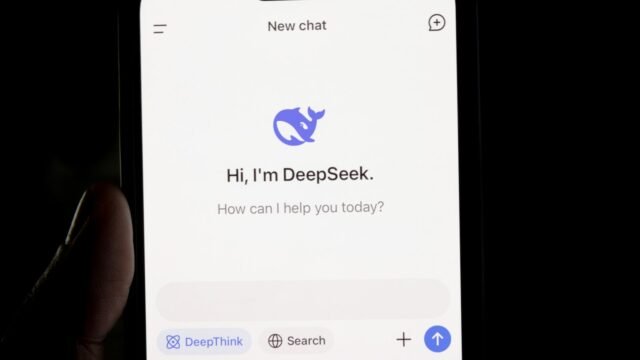
Chinese AI startup DeepSeek is preparing to launch its next-generation model, V4, around the middle of February 2026, according to a report by The Information on January 9 that was also carried by Reuters. People familiar with the company’s internal testing told the publication the model shows notably strong performance on programming tasks, drawing attention across the AI industry.
According to the report, V4 has performed well in internal evaluations on writing code, debugging and reasoning through complex logic, and DeepSeek believes it can compete with, and in some tests outperform, coding-focused models from Anthropic’s Claude family and OpenAI’s GPT series. Those comparisons come from the company’s own tests. Independent benchmarks will only be possible once the model is publicly released, and DeepSeek has not commented publicly on the timeline.
Open models and rapid spread
DeepSeek’s rise since its R1 reasoning model in early 2025 has rested on releasing open-weight models at low cost. That strategy has made the platform especially popular in developing economies. One industry report cited in coverage of the company puts DeepSeek’s share of the Chinese market at close to 89 percent, and its models are reported to be widely used in Russia, Iran and parts of Africa. Research published by Microsoft has similarly noted that low-cost models with local control are gaining ground quickly across the Global South. These figures are estimates from third parties and have not been confirmed by DeepSeek.
Scrutiny in the West
The company’s growth has been accompanied by close examination in Western countries. Governments including Australia, Germany and the United States have raised concerns about data privacy and national security, and several have restricted the use of DeepSeek’s app on official devices. Partly as a result, adoption in North America and Europe remains limited, and regulatory pressure and data protection rules are seen as the main obstacles to the company’s expansion there.
The situation reflects how the global AI landscape has become a contest over geopolitics, data sovereignty and trust as much as over technology. Platforms like DeepSeek are making capable AI more accessible in the developing world, while demands for transparency and control in Western markets constrain their reach.
If V4 lives up to the claims made for it once it is released, it could shift the balance in AI-assisted software development and reinforce the view that leadership in AI is no longer confined to a handful of Western laboratories.